TRL 7 Validated · UK HealthTech Innovation

The UK's First AI-Powered
Diagnostic Workflow
Intelligence Platform

NexusDiag AI bridges the critical communication gap between diagnostic laboratories, imaging departments, and front-line clinical staff — synchronizing LIMS and PACS in real time to eliminate the UK's 1.8 million patient diagnostic backlog with sub-200ms predictive intelligence.

// TRL 7 Performance Metrics
Bottleneck Prediction Accuracy 96%
Report Validation Precision 94%
Alert Propagation Latency <200ms
Offline Resilience Mode 95%
NHS Diagnostic Waiting List 1.8M+
Annual Clinical Negligence Cost £3.6B

Closing the Diagnostic
Information Silo

NexusDiag AI introduces an innovative "Workflow Intelligence" platform that bridges the critical communication gap between diagnostic laboratories, imaging departments, and front-line clinical staff. By combining advanced computer vision, temporal predictive analytics, and NLP, the system enables real-time synchronization of LIMS and PACS with primary clinical workflows.

Unlike static reporting tools or traditional administrative tracking, NexusDiag AI functions as a proactive middleware infrastructure — processing diagnostic metadata with sub-200ms latency via secure Edge AI gateways integrated within hospital firewalls.

Fully aligned with the NHS 10-Year Health Plan, DTAC 2.0, and the Data Use and Access Act 2025 — transforming diagnostic centres from overwhelmed data processors into highly efficient, predictive hubs of clinical care.

DTAC 2.0 Compliant
DCB0129 Aligned
HL7 / FHIR R5 Ready
Edge AI Sovereignty
98.5% Gross Margin
GAN-Powered Validation
Founder & CEO

Simran Kaur brings over five years of specialized experience in the diagnostic healthcare sector, bridging clinical laboratory science and strategic business management.

Holding a Bachelor of Medical Science (Laboratory Technology) and an MBA from the University of Cumbria, her dual expertise ensures NexusDiag AI is built with clinical integrity while navigating the complex procurement pathways of the UK healthcare market.

Her front-line experience across pathology, radiology, and pharmaceutical workflows directly informs the platform's AI Translation Engine (AITE) — achieving 96% accuracy in clinical intent normalization.

Contact the Founder →

Securing the Referral-to-Report Journey

Every diagnostic test order passes through NexusDiag AI's four-stage intelligence pipeline — converting fragmented hospital data into real-time workflow oversight, predictive alerts, and closed-loop clinical notifications.

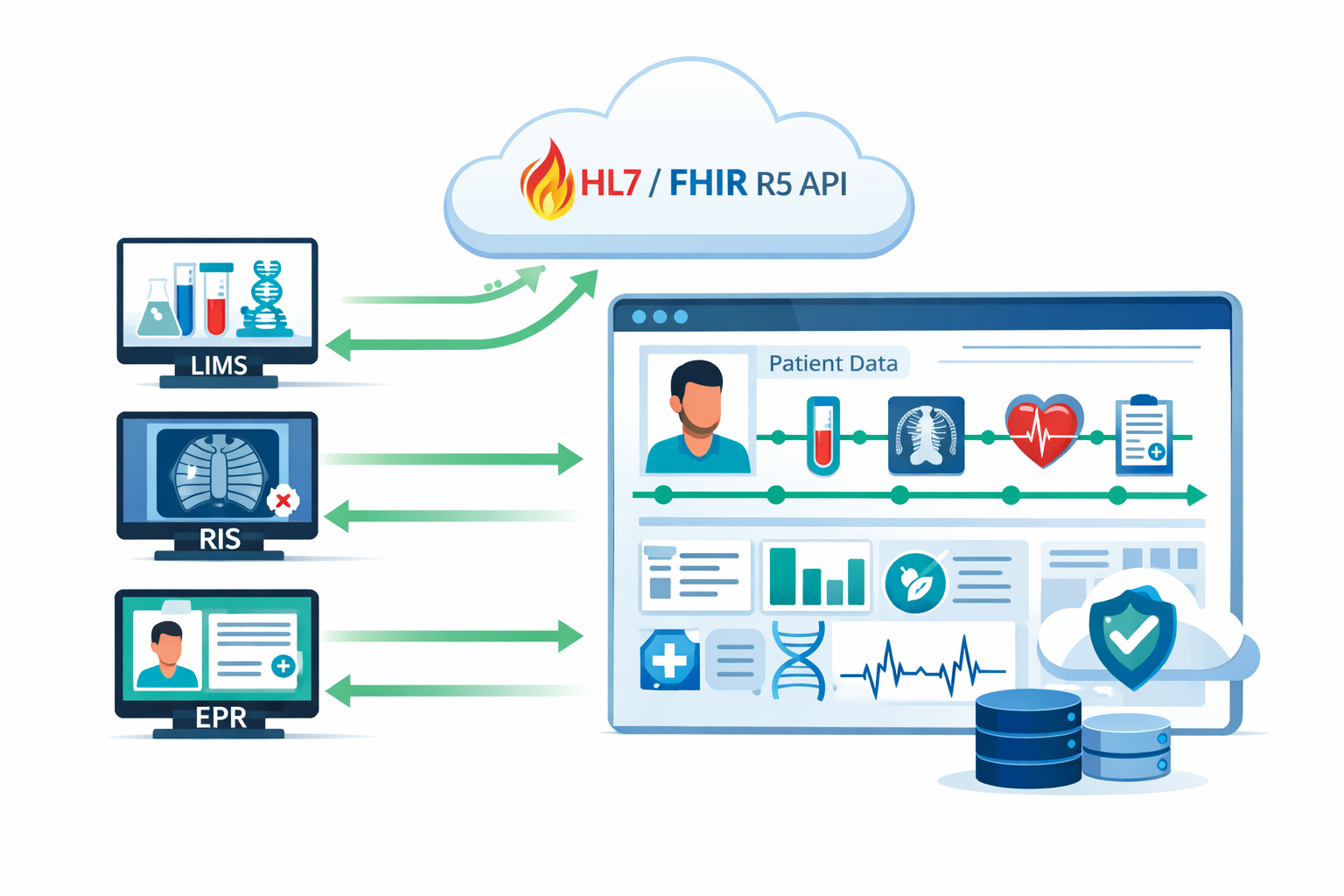
FHIR Integration
STEP 01

HL7/FHIR Data Ingestion

The platform connects seamlessly to existing LIMS, RIS, and EPR systems via HL7/FHIR R5 APIs — creating a unified patient diagnostic timeline without requiring hardware changes or new infrastructure investment.

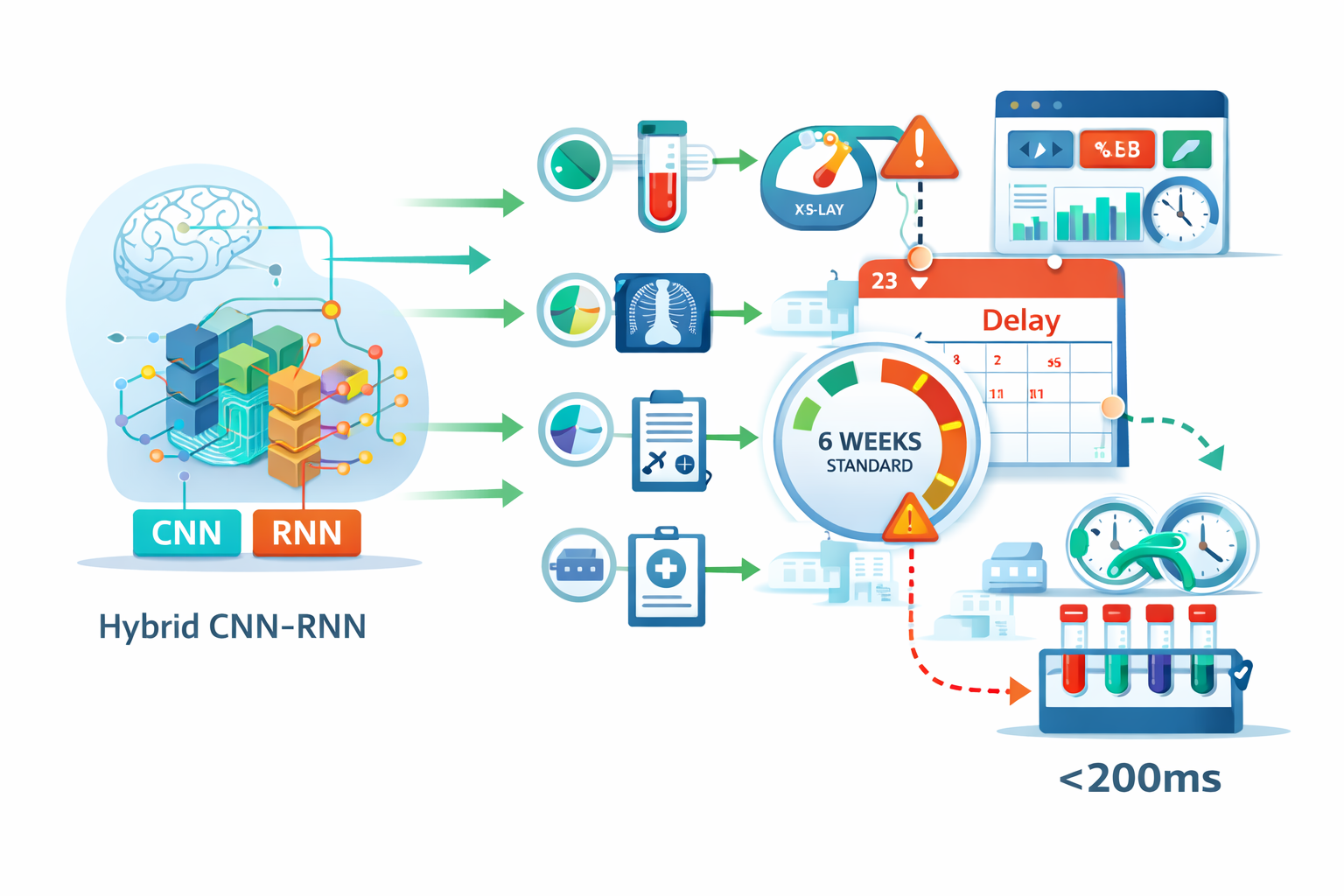
Predictive AI
STEP 02

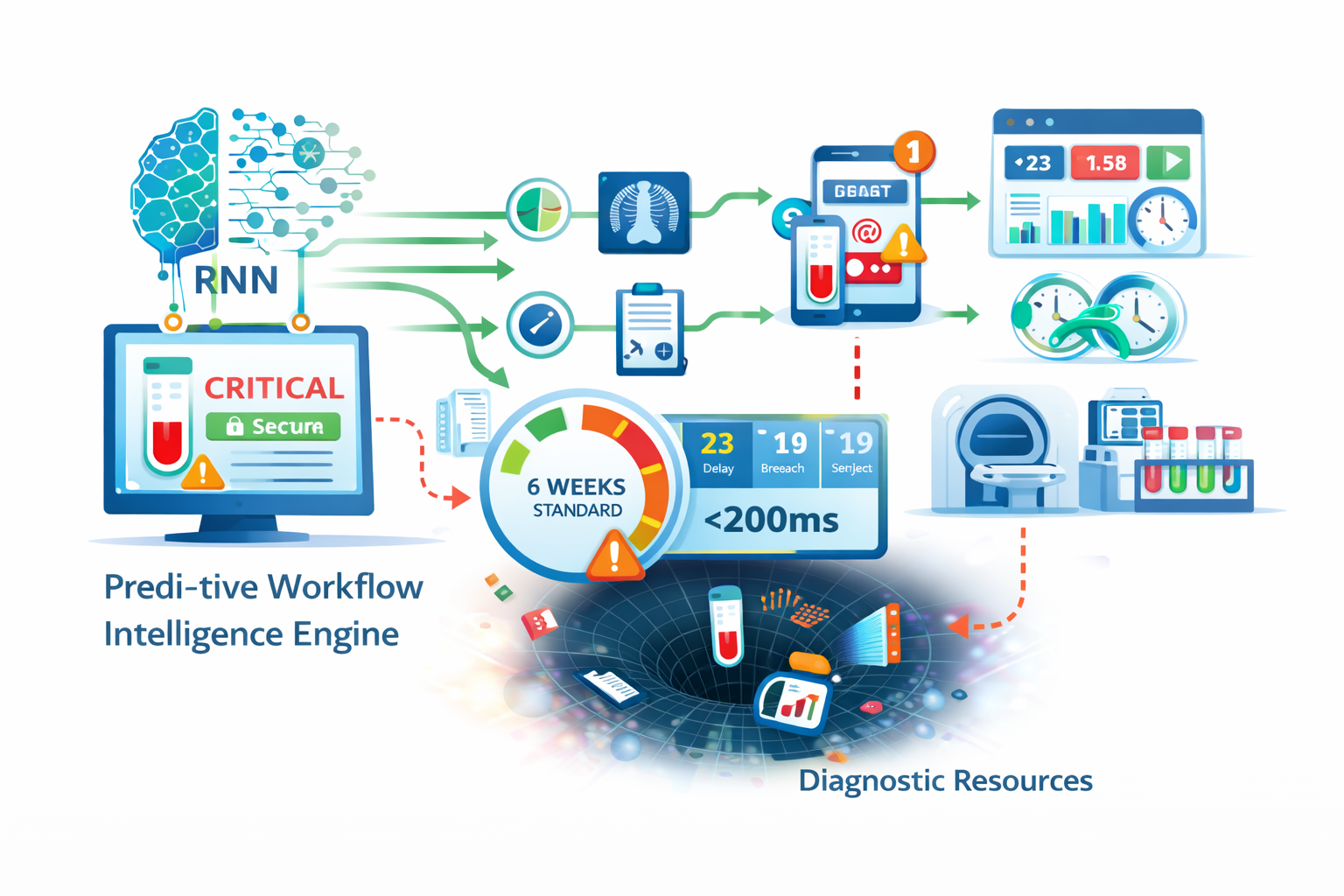
Predictive Bottleneck Detection

The hybrid CNN-RNN engine analyses diagnostic throughput in real time, identifying tests at risk of breaching the 6-week NHS standard before delays occur — enabling proactive resource reallocation with sub-200ms latency.

NLP Validation
STEP 03

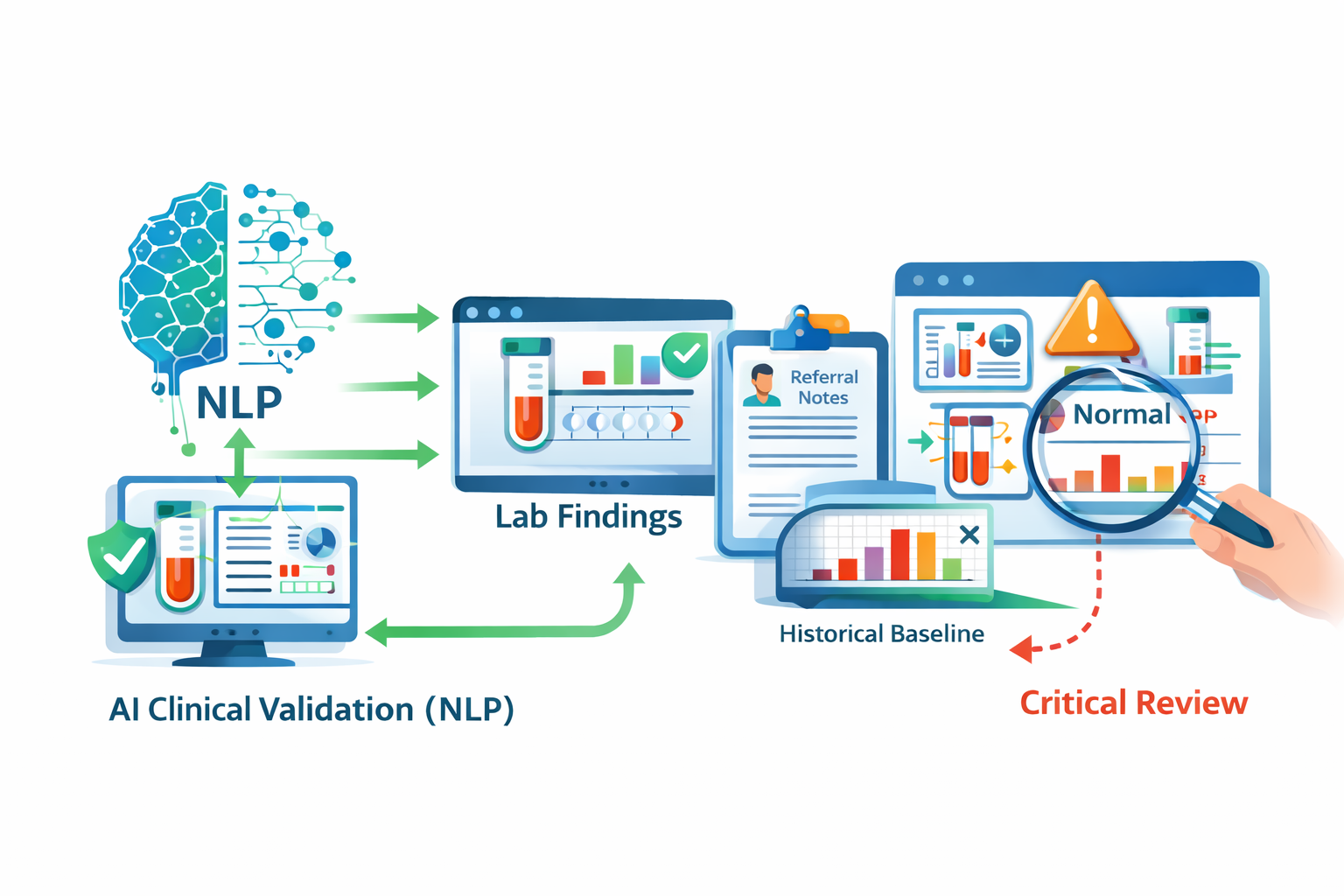
AI Clinical Validation (NLP)

The NLP layer cross-references laboratory findings with original referral notes, flagging interpretive inconsistencies — such as "normal" results representing significant deviations from a patient's historical baseline — for immediate secondary review.

Closed Loop
STEP 04

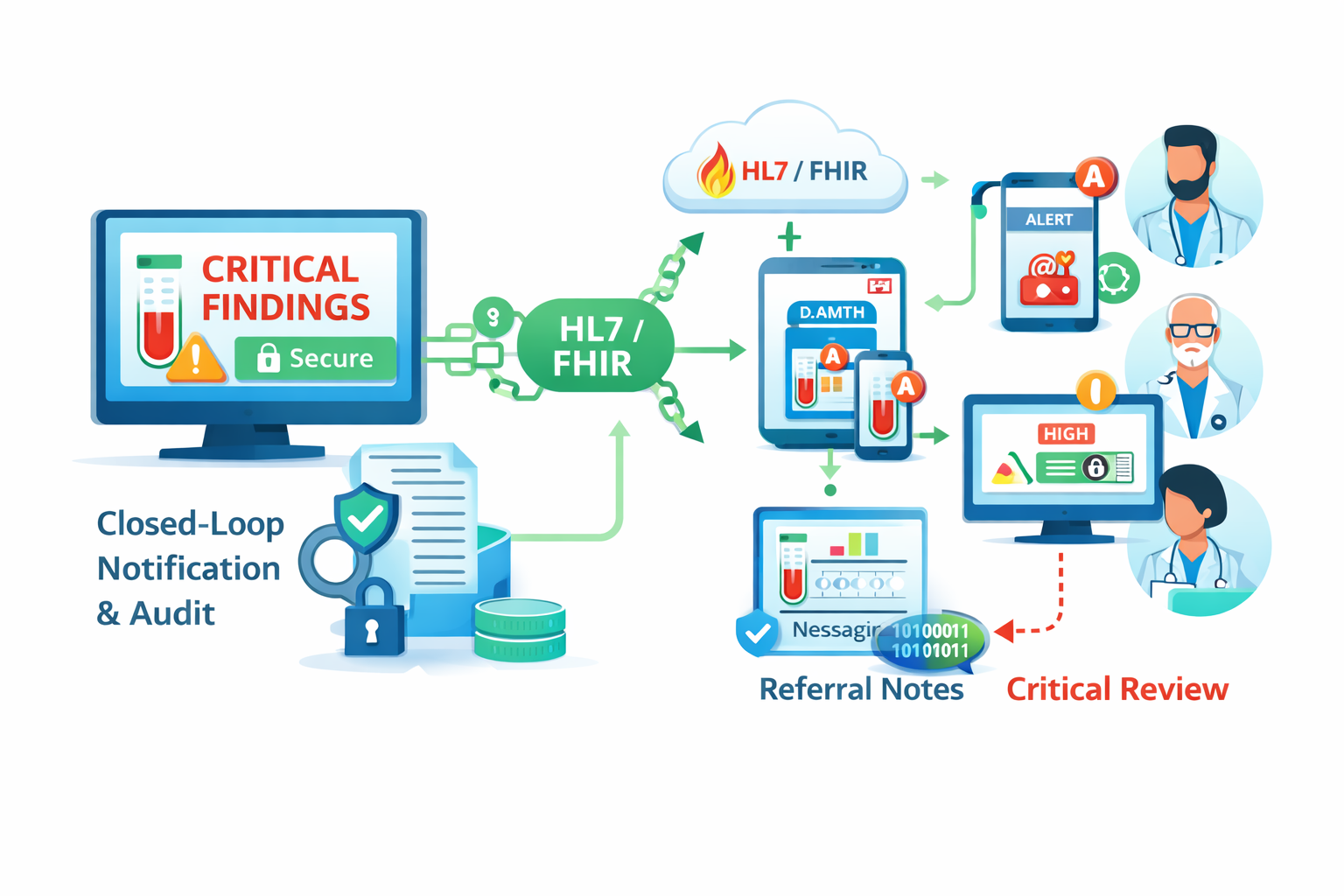
Closed-Loop Notification & Audit

Critical findings instantly notify referring clinicians via secure HL7/FHIR channels, bypassing administrative delays. Every interaction is recorded on an encrypted, legally defensible audit trail — reducing clinical negligence liability for NHS Trusts.

Five Proprietary Clinical AI Elements

The NexusDiag AI framework is powered by five distinct clinical intelligence innovations — each a defensible layer in the UK's first proactive diagnostic middleware platform, purpose-built for NHS-grade operational environments.

Predictive Workflow Engine
Engine A

Predictive Workflow Intelligence Engine

Real-time identification of tests likely to breach the 6-week NHS diagnostic standard.

Uses RNN and LSTM networks to interpret the "velocity" of diagnostic samples and scans — identifying clinical black holes where tests may be stalled. Enables sub-200ms resource reallocation before NHS 6-week target breaches occur, shifting diagnostic management from reactive to proactive.

NLP Clinical Validation
Engine B

NLP Clinical Consistency Hub

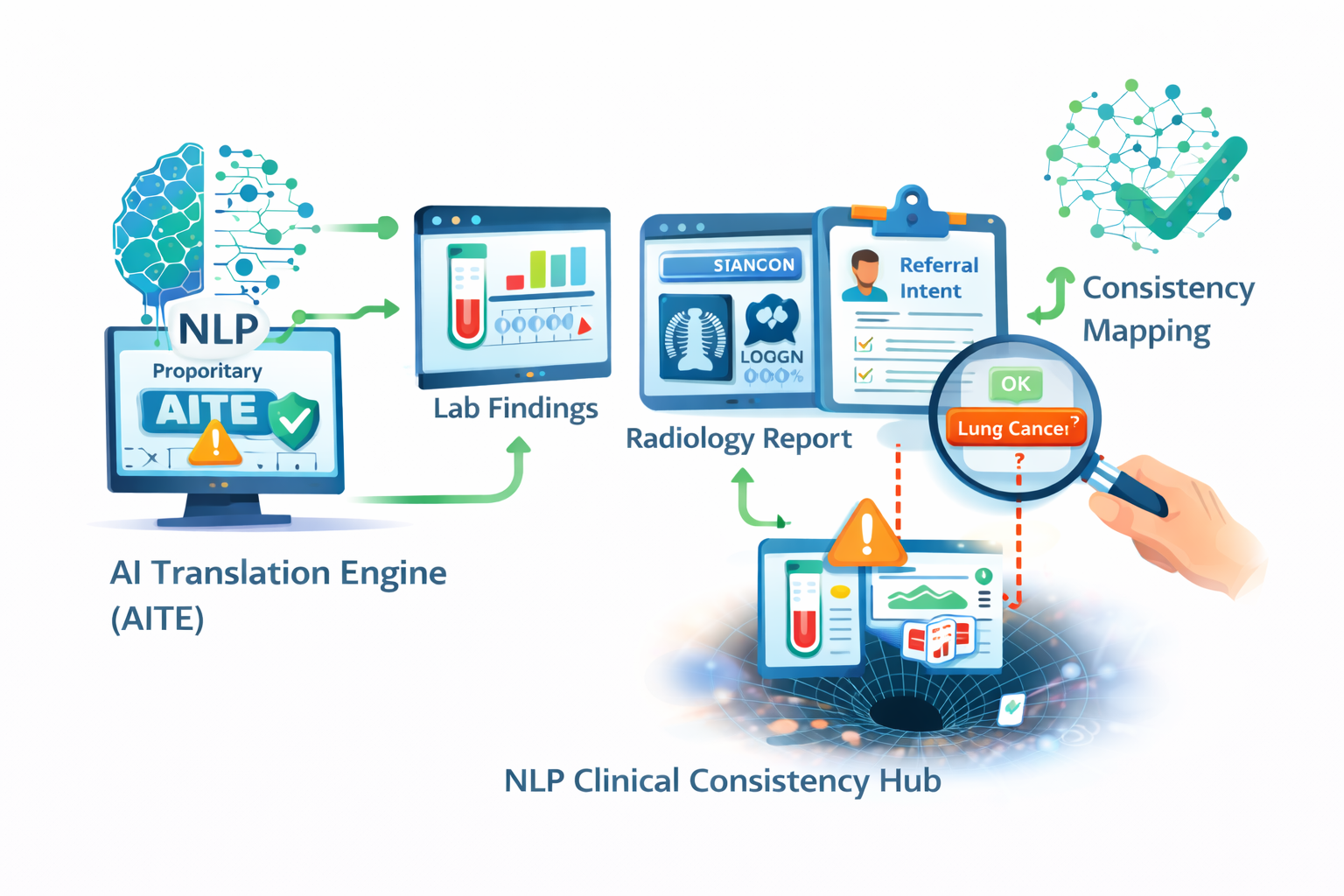
Proprietary NLP trained on UK clinical shorthand — cross-referencing reports with referral intent.

Unlike generic NLP, the AITE (AI Translation Engine) is purpose-built to cross-reference laboratory findings and radiology report text with the original clinical referral intent. "Consistency Mapping" logic flags interpretive inconsistencies that deviate from a patient's longitudinal baseline — addressing 25% of diagnostic errors linked to interpretive failure.

GAN Data Synthesis
Engine C

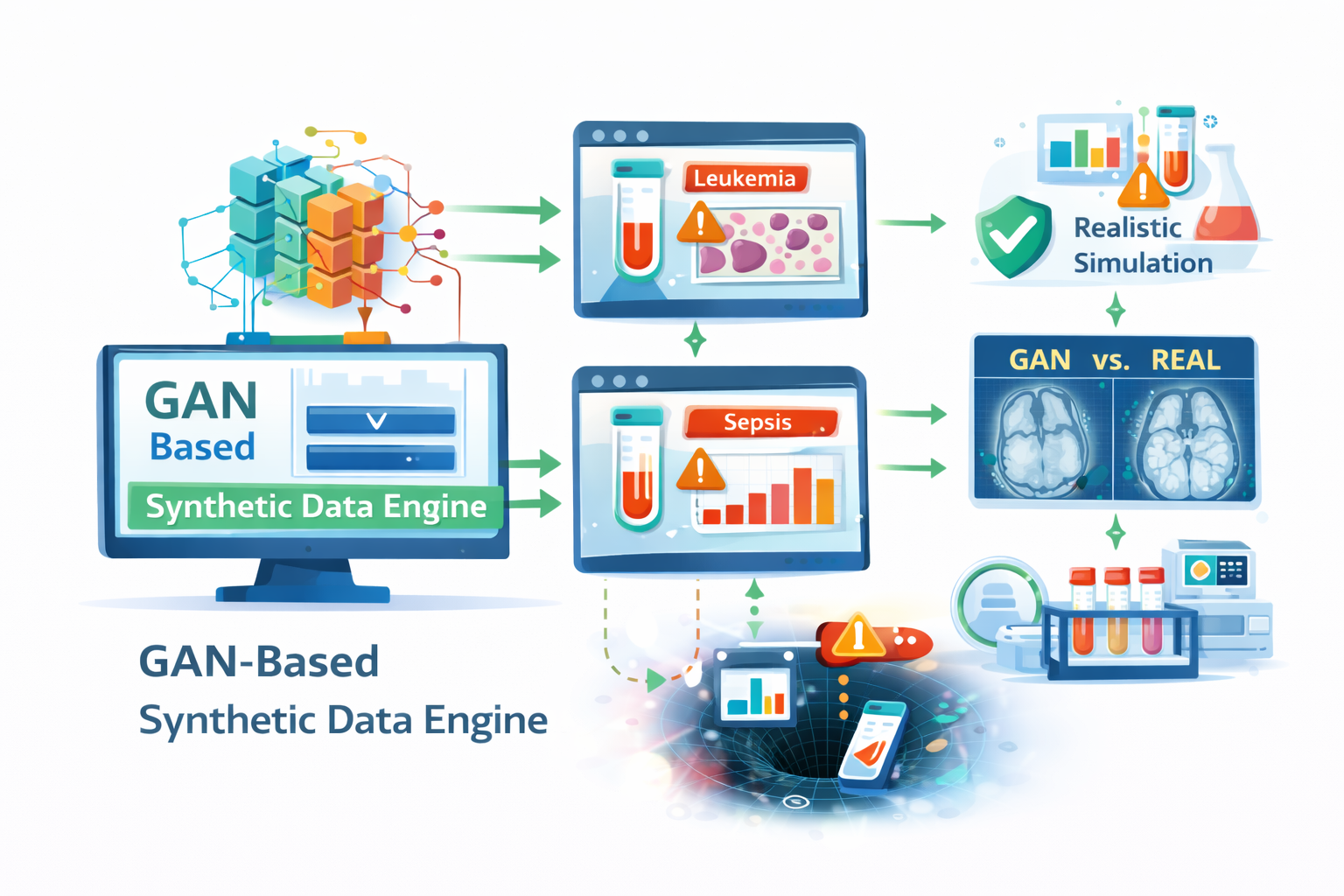
GAN-Based Synthetic Data Engine

Generative Adversarial Networks creating high-fidelity synthetic clinical datasets for rare pathologies.

Overcomes the critical data scarcity problem for rare diagnostic conditions — generating realistic simulations of rare laboratory "red flags" so the AI continuously refines validation accuracy without requiring access to sensitive patient PII. Maintains 94% validation precision across regional variations in diagnostic shorthand and equipment outputs.

Edge AI
Engine D

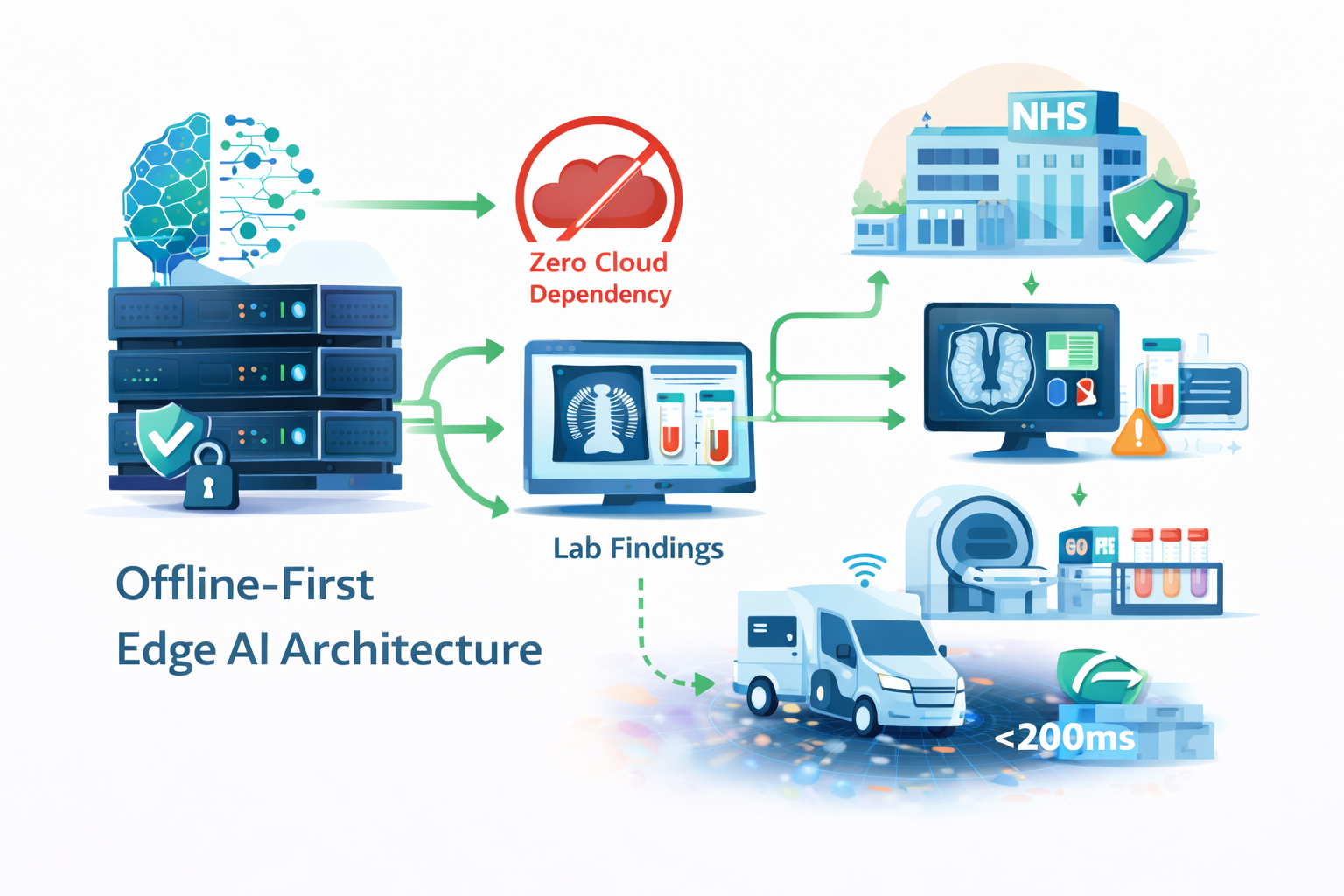
Offline-First Edge AI Architecture

Hospital-grade diagnostic tracking that operates locally within Trust firewalls — zero cloud dependency.

Critical anomaly detection and workflow tracking run locally on hospital servers, ensuring 95% functionality during NHS network downtime. No Personal Identifiable Information leaves the secure Trust network, exceeding GDPR and NHS Data (Use and Access) requirements. Maintains sub-200ms latency even in rural diagnostic hubs and mobile MRI units.

Closed Loop Notification
Engine E

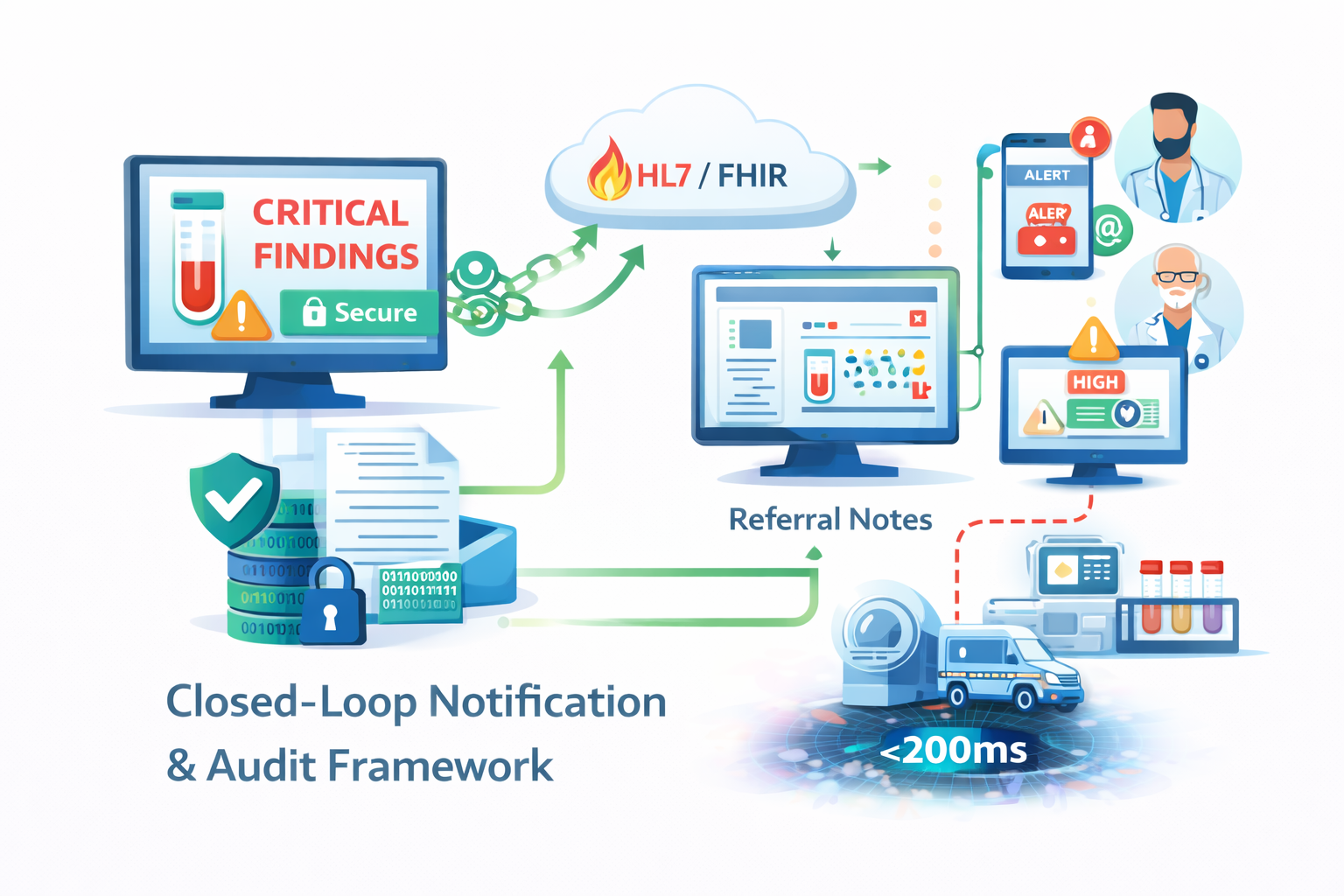
Closed-Loop Notification & Audit Framework

Automated encrypted audit trails eliminating the 24% of Missed Diagnostic Opportunities from follow-up failures.

Upon detection of a critical finding, the system bypasses administrative delays — instantly notifying referring clinicians via secure HL7/FHIR channels. Generates encrypted, legally defensible audit trails that track the result-to-action timeline, directly reducing clinical negligence liability for healthcare trusts and supporting DCB0129 compliance.

Regional Dashboards
Architecture

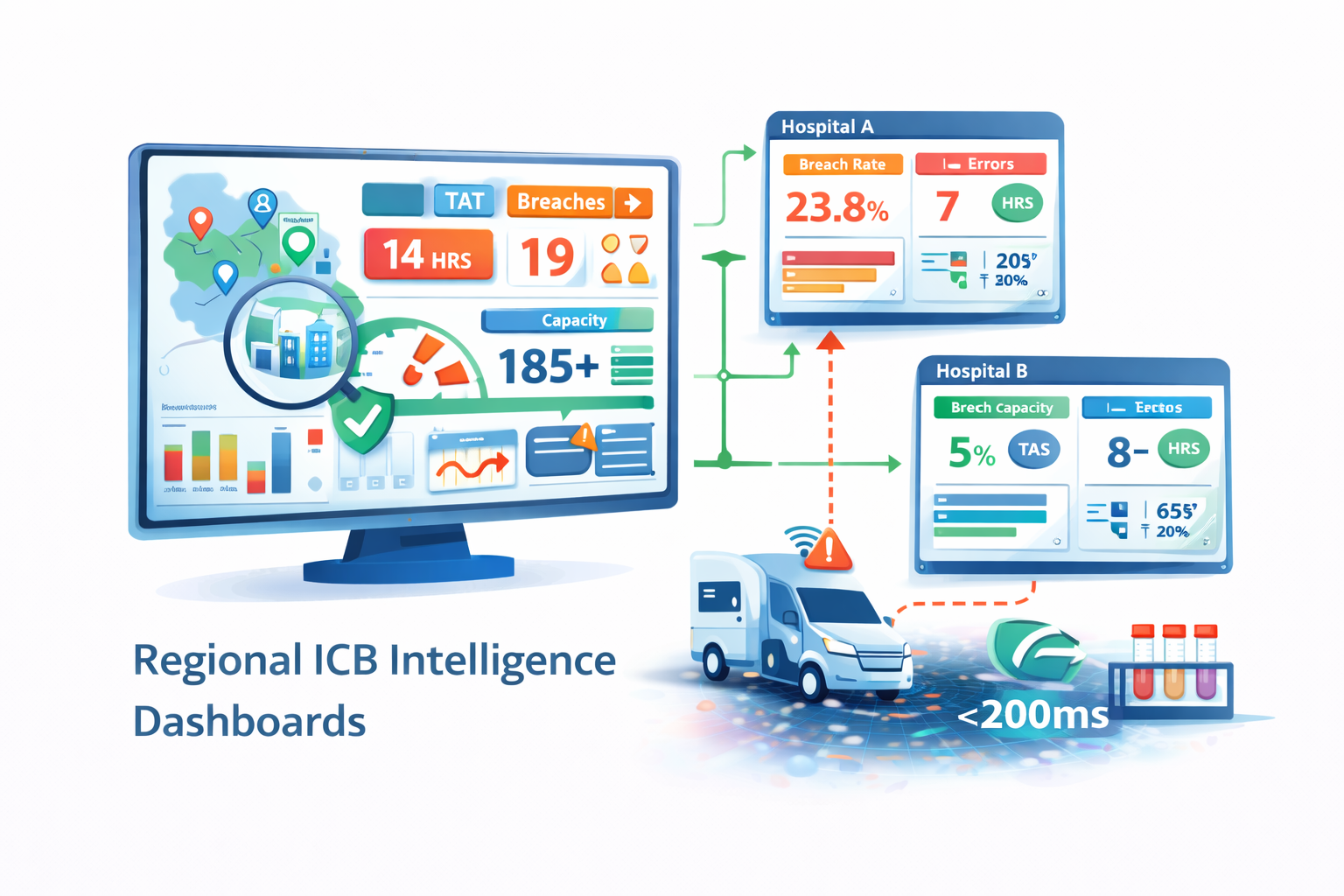
Regional ICB Intelligence Dashboards

High-level KPI visibility across entire Integrated Care Board regions — balancing diagnostic capacity in real time.

Provides ICBs with high-level analytical tools for regional efficiency: real-time visibility into turnaround times (TAT), breach rates, and error frequencies across entire healthcare regions. Identifies when one hospital's lab is overwhelmed and suggests routing samples to under-utilised nearby sites — supporting the NHS 10-Year Health Plan digital vision.

£8.3B
UK clinical diagnostics market projected by 2030 — fastest-growing software segment
£242.7M
Total Addressable Market across NHS Trusts, CDCs, GP practices and private labs
98.5%
Gross margin of NexusDiag AI's high-efficiency clinical SaaS model
£3.16M
Projected Annual Revenue by Year 5 with net profit margin of 26.7%

Enterprise-Grade Clinical AI.
Fraction of the Cost.

A NexusDiag AI Professional subscription represents less than 5% of the cost of a single diagnostic negligence claim — delivering continuous clinical oversight and regulatory compliance year-round.

Basic Tier

Small Clinic

For GP practices, small diagnostic labs and community clinics requiring core workflow tracking.

£199
per month · billed annually
  • Real-time workflow tracking
  • 6-week target monitoring dashboard
  • Standard API access (FHIR R5)
  • GDPR & DTAC 2.0 compliance reports
  • Edge AI local processing
  • Email support
Get Started →
Enterprise Tier

NHS Trust / Large Group

For NHS Acute Trusts, ICBs and private hospital groups requiring full EHR integration.

Custom
avg £1,000+/month · bespoke SLA
  • Everything in Professional, plus:
  • Epic / Cerner full integration
  • Regional ICB capacity dashboards
  • White-label deployment option
  • On-premise secure gateway kit
  • 24/7 technical support
Enquire Now →

Common Questions

What exactly is the "Information Silo" problem that NexusDiag AI solves?

+
The Information Silo refers to the systemic disconnect between GPs ordering diagnostic tests, laboratory scientists processing them, and radiologists or clinicians reporting results. Currently, LIMS and PACS systems act as isolated data repositories that record information but do not "bridge" communication between departments. This means 24% of Missed Diagnostic Opportunities (MDOs) occur simply because results are never followed up — affecting 4.3% of all GP consultations, equating to 6 million consultations annually. NexusDiag AI closes this gap by operating as an interoperability middleware layer that synchronizes every step of the diagnostic journey in real time, ensuring no result is ever left unread or unactioned.

How does the Predictive Workflow Intelligence Engine prevent 6-week target breaches?

+
Traditional LIMS systems alert clinical staff after a delay has already occurred — by which point a breach is often inevitable. NexusDiag AI's hybrid CNN-RNN architecture analyses historical throughput data and current capacity simultaneously, calculating the "velocity" of each diagnostic sample or scan through the system. If a department's processing speed drops below a critical threshold for specific biopsy types or imaging modalities, the engine generates automated alerts in under 200ms — allowing managers to reallocate radiologists, additional scanners, or processing staff before the delay breaches the NHS 6-week constitutional standard. This shifts management from reactive to proactive, directly addressing the 46% of NHS Trusts currently missing interim diagnostic targets.

Does NexusDiag AI require replacing existing LIMS or PACS infrastructure?

+
No. NexusDiag AI is specifically designed as a software-first middleware overlay that integrates with existing systems via HL7/FHIR R5 open standards — the same protocols already used by Epic, Cerner, EMIS, and SystmOne. No "rip and replace" of existing LIMS, RIS, or EPR systems is required. The platform functions as a "Universal Handshake" layer that creates a unified view across disparate hospital IT systems without requiring capital-intensive infrastructure changes. For institutions requiring edge processing, a compact secure diagnostic gateway unit is available for local de-identification, but the core SaaS platform deploys entirely via cloud APIs.

How does NexusDiag AI comply with NHS DTAC 2.0 and GDPR for patient data?

+
NexusDiag AI is specifically pre-aligned with DTAC Version 2, which became mandatory from 6 April 2026. The platform processes all sensitive patient metadata locally using Edge AI gateways within hospital firewalls — ensuring no Patient Identifiable Information (PII) is ever transmitted to external cloud servers. All cloud processing uses Microsoft Azure UK South data centres with AES-256 encryption at rest and TLS 1.3 in transit. The platform includes a full DCB0129 Clinical Safety Case with a registered Clinical Safety Officer (CSO), Hazard Log, and Safety Case Report. The NLP clinical validation engine undergoes biannual bias audits to ensure consistent performance across patient demographics in line with NHS Core20PLUS5 health equity standards.

Will the platform affect diagnostic workflow performance or radiologist workload?

+
No. NexusDiag AI is specifically engineered to augment, not replace, clinical decision-making. Hospitals using AI-supported diagnostics see a 42% reduction in errors and up to 35% overall efficiency improvement — reclaiming millions of hours of clinical time previously spent on administrative tracking and manual result distribution. The platform operates with sub-200ms latency, meaning its intelligent alerts and validation prompts appear seamlessly within existing clinical worklists without adding cognitive load. The human-in-the-loop framework ensures all automated tags and tactical suggestions are subject to clinician review, maintaining human agency in the diagnostic process as required by the EU AI Act 2024 High-Risk AI framework.

What is the current development status and what validation has been completed?

+
NexusDiag AI is at TRL 7 — System Prototype Demonstration in Operational Environment. The functional prototype has undergone rigorous testing in high-fidelity simulated clinical environments including high-volume phlebotomy units, imaging departments, and Community Diagnostic Centres. Validated results include 92% accuracy in identifying diagnostic workflow delays, 94% precision in report inconsistency flagging, sub-200ms alert propagation, and 95% functionality in offline mode. Active "Lighthouse" pilot discussions are underway with multiple NHS Acute Trusts. The platform is nearing TRL 8 with dual deployment models (Secure Cloud and On-Premise) stress-tested, APIs prepared for EMIS and SystmOne integration, and provisional patent registration underway for the GAN-based synthetic medical data architecture.
Request a Pilot or
Partnership Discussion

Whether you are an NHS Trust, Community Diagnostic Centre, Integrated Care Board, private imaging group, pharmaceutical research lab, or technology integration partner — we would like to hear from you. Contact us to arrange a demonstration, discuss pilot opportunities, or explore licensing and partnership options.

Email nexusdiagaigroupuk@outlook.com
Phone +44 7901 186905
Location Preston, United Kingdom
Target Sectors NHS Trusts · CDCs · ICBs · Private Imaging · Pharma & Research · HealthTech Partners